

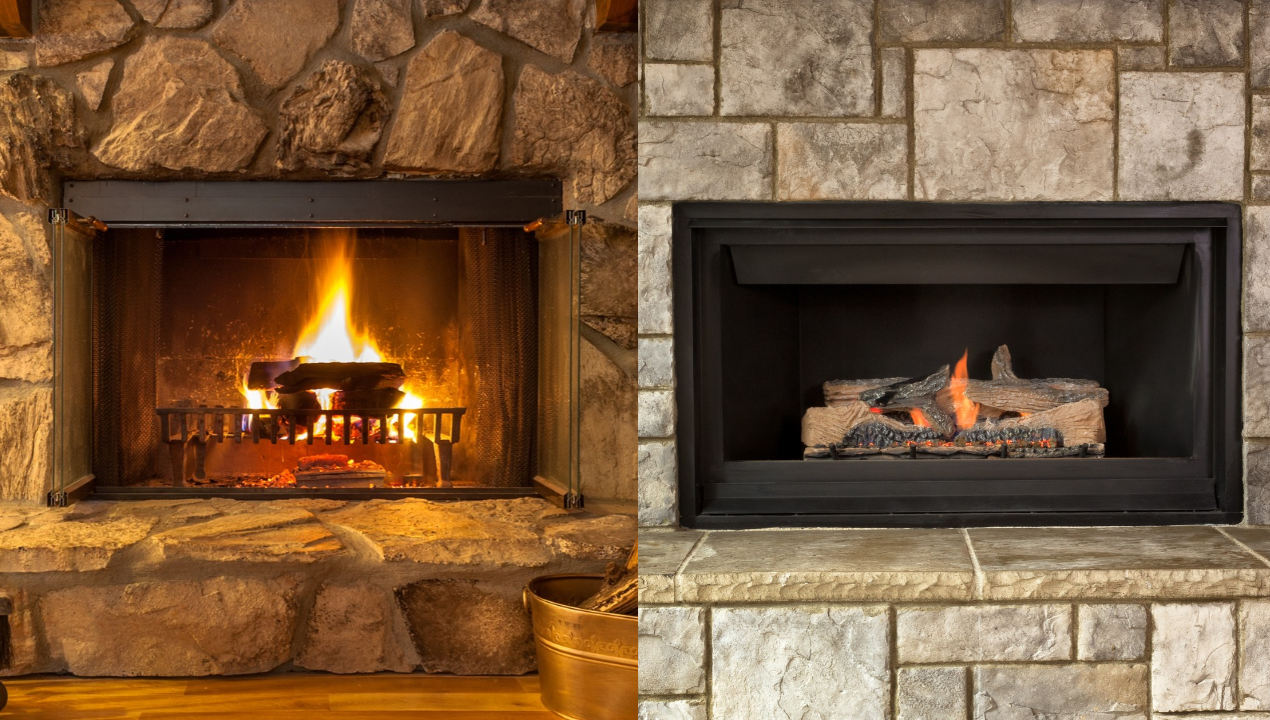
Choosing a new fireplace is exciting, but one of the first decisions can also be the hardest: gas or wood? Both bring warmth and comfort to a Wisconsin winter, and both look beautiful in a living room in Mequon, Port Washington, or Milwaukee’s North Shore. The right choice depends on how you live, how often you plan to use it, and what kind of fire experience you want. Our team helps homeowners sort through these questions every day as part of our fireplace installation process.
Here’s a straightforward look at how gas and wood fireplaces compare, so you can walk into your consultation feeling confident.
What Is the Main Difference Between a Gas and a Wood Fireplace?
The biggest difference is the fuel and how you interact with the fire. A wood fireplace burns real logs. You build the fire, tend it, and clean up the ash afterward. A gas fireplace burns natural gas or propane through a burner, usually with realistic ceramic logs or decorative media, and you turn it on and off with a switch, wall control, or remote.
That difference shapes almost everything else, from installation and venting to day-to-day convenience and upkeep.
Which Type of Fireplace Is More Convenient?
For most people, gas wins on convenience. There’s no wood to haul, split, or store, and no ash to scoop. You can have a fire in seconds and shut it off just as quickly when you head to bed or leave the house. Many models offer thermostats, timers, and adjustable flame heights, so you can fine-tune the heat and ambiance.
Busy households, people who want a quick fire on weeknights, and anyone who would rather not deal with firewood often lean toward gas. You can browse our gas fireplaces to see the range of styles available.
Why Do Some Homeowners Still Prefer Wood?
For many people, nothing replaces a real wood fire. The crackle, the scent, the way the flames shift and glow, and the simple ritual of building a fire are a big part of the appeal. A wood fire can also feel like a cozy centerpiece for gatherings on long winter evenings.
Today’s wood fireplaces are not the drafty open hearths of the past. High-efficiency, EPA-certified models are designed to burn cleaner and put more heat into the room. Take a look at our wood fireplaces if the real-fire experience is what you’re after.
Which Fireplace Puts Out More Heat?
It depends on the specific model more than the fuel type. Both gas and wood fireplaces come in decorative versions designed mainly for ambiance and in heat-focused versions built to warm a room or even a larger living area. A sealed, high-efficiency unit of either type will usually heat far better than a traditional open masonry fireplace, which loses much of its warmth up the chimney.
If heat is a top priority, let us know during your consultation and design visit. We’ll match the unit’s output to your room size, layout, and how you plan to use it.
Do I Need a Chimney for a Gas or Wood Fireplace?
A wood-burning fireplace needs a properly sized chimney or a factory-built chimney system that meets the manufacturer’s specifications and local codes. That’s because wood fires produce smoke and byproducts that must be carried safely out of the home.
Many gas fireplaces are more flexible. Direct-vent gas units can often vent horizontally through an exterior wall or vertically through the roof, which opens up more placement options in homes that never had a fireplace. Your installer will confirm the right venting approach based on your home, the unit, and code requirements.
Have questions about your home? Our team can help.
What If I Already Have an Old Wood Fireplace?
If you have an existing masonry fireplace that you rarely use because it’s drafty or smoky, a fireplace insert may be the best of both worlds. An insert slides into the existing firebox and uses a liner that runs up the chimney. Inserts are available in both gas and wood versions, and they can dramatically improve how well an old fireplace performs. Explore our fireplace inserts to see what fits your space.
How Does Maintenance Compare?
Every fireplace needs regular care, but the routine looks different. Wood fireplaces need ash removal, careful firewood storage, and an annual chimney inspection and sweeping to control creosote buildup. The complete guide to wood fireplace maintenance walks through what that looks like through the year.
Gas fireplaces need less hands-on work, but they still benefit from an annual checkup. A technician can clean the burner and logs, check the glass gasket, inspect the venting, and make sure the pilot and controls are working correctly. The NFPA 211 standard calls for chimneys, fireplaces, and vents to be inspected annually, regardless of fuel. Our maintenance and repair team can keep either type running safely.
Which Is Better for a Wisconsin Home?
There isn’t one right answer. Ask yourself a few questions:
- Do you want a fire at the push of a button, or do you enjoy the process of building one?
- Do you have space to store and keep firewood dry through a Wisconsin winter?
- Will the fireplace be a main heat source for a room, or mostly for ambiance?
- Do you already have a chimney, or will the unit need a new venting path?
- How much time do you want to spend on cleanup and upkeep?
If convenience and easy control are at the top of your list, gas is often the better fit. If you love the full sensory experience of a real fire and don’t mind the extra work, wood may be the way to go.
What Should I Expect Once I’ve Decided?
Once you’ve chosen a direction, our team handles the details, from venting design and gas or electrical connections to final testing. If you’re curious about the steps involved, read what to expect during a fireplace installation.
The Fire Factory proudly serves homeowners throughout Southeastern Wisconsin, including Milwaukee, Mequon, Port Washington, and surrounding communities. Stop by our showroom to see gas and wood fireplaces in person, or contact us to start planning your project.